
"equatorial regions"
400 article(s) found

Puerto Rico Coffee Plantation Hasenda Coffee Plantation Flavor Taste Plantation Introduction Ecuador Coffee
Chinese and foreign investment network reminds coffee lovers, now there are Guangdong coffee buyers to Ecuador to purchase coffee beans, I believe Guangzhou coffee lovers will soon be able to taste the aroma of Ecuadorian coffee in the cafes of the streets. In recent years, in addition to Ecuadorian coffee, more and more Ecuadorian products have entered the Chinese market, including Ecuadorian roses.

Aromatic and aromatic Ecuadorian fine coffee beans Flavor Taste Aroma Description Introduction
It wasn't until the early 1990s that the Gonzalez family bought Hassenda Coffee Plantation. Local microclimates, intense equatorial sunlight and rapid temperature changes (43 ° C at sea level and 10 ° C to 16 ° C at 275 m above sea level) caused by the Humboldt Current provided unique favorable conditions for the Gonzalez family to expand.

What is the flavor of Colombian Coca Cola Colombian Coffee
Professional coffee knowledge exchange more coffee bean information please follow the coffee workshop (Wechat official account cafe_style) Cauca province is one of Colombia's well-known boutique coffee producing areas, ranging from 1758 meters to 2100m above sea level. A fixed rainfall cycle provides favorable results for coffee trees. High intensity sunshine and low rainfall coincide with the flowering season, when it also leaves the equatorial windless zone.

What are the three largest coffee producing areas in the world? what is the largest coffee producing area in Asia?
Professional coffee knowledge exchange more coffee bean information please follow the coffee workshop (Wechat official account cafe_style) front street-the three major coffee producing areas in the world coffee trees are planted in the equatorial belt of the Tropic of Cancer and the Tropic of Cancer, called the coffee belt. There are 62 coffee-growing countries in the world, and there are three major coffee-growing areas, each of which has its own unique geomorphology.

Kilimanjaro and Kilimanjaro Coffee Kilimanjaro Coffee
Professional coffee knowledge exchange More coffee bean information Please pay attention to coffee workshop (Weixin Official Accounts cafe_style) Tanzania is a typical East African country, bordering Kenya and Uganda in the north, Malawi, Mozambique and Zambia in the south, Rwanda and Burundi in the west. When it comes to coffee in Tanzania, one cannot fail to mention coffee produced in the Kilimanjaro region. She is located in Tanzania.
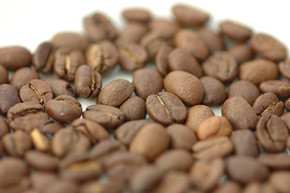
What's the difference between Arabica coffee and Roberta coffee?
Following caf é (Wechat official account vdailycom) found that Beautiful Cafe opened a small shop of its own. At present, coffee has been grown in more than 50 countries around the world, but good coffee beans are mainly produced in the equatorial zone between 25 degrees north latitude and 30 degrees south latitude, high altitude, tropical climate and fertile soil. Only in this way can we grow quality coffee beans with full particles and rich coffee flavor. Full

Ecuador Coffee Plantation Flavor Taste Features Hasenda Coffee Plantation
When it comes to Ecuadorian coffee, you have to mention the organic coffee of the Galapagos Islands in Ecuador. Galapagos Islands is a famous tourist attraction, declared a world natural heritage by UNESCO, extremely rich in products, organic coffee is one of the unique. Local fertile volcanic soil, micro-climate and other unique ecological environment, coupled with its non-

Introduction to the flavor and taste of the boutique coffee manor in the alpine coffee producing area of Ecuador
Mr. Veniso, winner of the 2014 Ecuador Coffee Competition, told reporters that some of the Ecuadorian coffee is espresso made from Ecuadorian alpine coffee beans. This coffee comes from a mountain area about 1000 to 2000 meters above sea level and has a mellow taste with aromas and sweetness of fruit, grass and chocolate. Some add thin coffee from the Amazon region to this espresso.

Flavor description of high-quality coffee beans in Ecuador introduction to the production area of grinding scale
Ecuador is one of the few countries in South America that produces both Arabica coffee and Robbins coffee. However, as the land suitable for Arabica coffee trees is decreasing, the production of Robbins coffee is gradually increasing. The best Arabica coffee comes from the Andes, especially the Chanchagu Valley (ChanchamgoValley), which is divided into two mountains from the south.

Coffee bean flavor of Santa Cruz Manor in Ecuador describes how to drink Santa Cruz Manor Coffee
Professional barista exchanges please follow the coffee workshop (Wechat official account cafe_style) Ecuador Santa Cruz Manor coffee bean flavor description of Santa Cruz Manor coffee how to drink the Santa Cruz Manor Coffee Flatoma de Belanga discovered the island, that is, in 1875, a native named Corworth came to St. Cristobal Island, where he founded the Hasunda Cafe.

Hasunda coffee Ecuadorian coffee characteristics Ecuadorian coffee beans taste
Professional coffee knowledge exchange more coffee bean information please follow the coffee workshop (Wechat official account cafe_style) coffee treasures from the hometown of giant turtles, this kind of coffee is of excellent quality and does not use any chemicals when growing. Coffee is grown in San Cristobal (Saint Crstbal). St. Cristobal is one of the Galapagos Islands (Galapagos Islands).

Introduction to the taste treatment of grinding degree of Rwanda coffee flavor description of varieties in producing area
Rwanda has a temperate and tropical plateau climate, and because of its high altitude, its temperature is lower than that of typical equatorial countries. The daily temperature in Kigali, which is located in the middle of the country, is generally between 12 and 27C, with a relatively wide range of fluctuations throughout the year.

What is Arabica coffee? Evolution and Improvement of Arabica Coffee Species
Coffee was first discovered by humans in Ethiopia, Africa, and later spread to other equatorial countries. Therefore, it is natural that the earliest coffee tree species discovered in Ethiopia is the earliest native species. When it comes to Arabica, the original saying is that coffee originated in Ethiopia, and then began to spread to all parts of the world suitable for coffee growing.

Which varieties of boutique coffee beans are produced all over the world, do you know?
Professional coffee knowledge exchange more coffee bean information please follow the coffee workshop (Wechat official account cafe_style) front street-boutique coffee producing area, variety profile coffee trees are planted in the equatorial belt of the Tropic of Cancer and Tropic of Cancer, called the coffee belt. There are 62 coffee-growing countries in the world, and there are three major coffee-growing areas, each of which has its own unique landscape.

Introduction to Hassanda Coffee Manor
Mr. Veniso, winner of the 2014 Ecuador Coffee Competition, told reporters that some of the Ecuadorian coffee is espresso made from Ecuadorian alpine coffee beans. This coffee comes from a mountain area about 1000 to 2000 meters above sea level and has a mellow taste with aromas and sweetness of fruit, grass and chocolate. Some add thin coffee from the Amazon region to this espresso.

Relationship between altitude and coffee flavor | with the increase of altitude, the aroma of coffee will become gradually.
For information, please note that the geographical location of the coffee workshop (Wechat official account cafe_style) has a profound impact on the flavor of coffee beans. All coffee grows in the tropics, and the altitude at which it grows has a profound effect on the taste of coffee. The tropical belt extends from 30 degrees north latitude to the equatorial regions of the southern mountains that produce the world's truly high-quality Arabica coffee. Central and South America, South Asia and

Introduction to the taste of manor flavor description in aaa growing environment of Kilimanjaro coffee
Qilimanjaro coffee AAA growing environment manor flavor description taste introduction this kind of coffee beans have extraordinary quality, produced in the Mohi district near Mount Kilimanjaro, the mountain area with a height of 3, 000 feet to 6, 000 feet is the most suitable for growing coffee, the fertile volcanic ash gives the coffee here a strong texture and soft acidity. It exudes delicacy.

What kind of weather conditions do you need to grow coffee beans? which countries have natural bars for growing coffee trees?
At present, coffee has been grown in more than 50 countries in the world, but most of the good coffee beans are concentrated in the equatorial zone between 25 degrees north latitude and 30 degrees south latitude, high altitude, tropical climate and fertile soil. in order to grow full-grained, coffee-rich high-quality coffee beans. Coffee beans are grown all over the world, mainly in Brazil, Colombia, Indonesia and Vietnam.

Flavor description of Starbucks Arabica Coffee beans introduction to the taste of grinding scale varieties
Flavor description of Starbucks Arabica Coffee beans what is the growing environment of Arabica coffee beans? Generally in the equatorial north and south latitude 23.5 degrees, above 1500 meters above sea level plateau and mountain volcanic soil, the annual temperature is constant between 15-25 degrees, there is plenty of rainfall to avoid strong direct sunlight to grow in the environment. "Arabica.

Fragrant and full-grained Rwandan coffee flavor and taste the introduction of fine coffee beans in the manor producing area
Rwanda has a temperate and tropical plateau climate, and because of its high altitude, its temperature is lower than that of typical equatorial countries. The daily temperature in Kigali, which is located in the middle of the country, is generally between 12 and 27C, with a relatively wide range of fluctuations throughout the year.